
How to Evaluate a Real Estate Syndication Sponsor
July 28, 2026 · By Cody Leivas
Most passive investors underwrite the deal and skip the sponsor. That’s backwards. In a syndication you’re not buying a building — you’re hiring an operator to buy it and run it for you, usually for five to seven years. The property sets the ceiling. The sponsor decides whether you ever get there. Here’s how we’d diligence a general partner if we were the one writing the check.
Track record — through a full cycle
Start with the record, and read it like a skeptic. A sponsor that launched in 2021 and shows strong marks rode cap-rate compression and rock-bottom rates. That’s not the same as skill, and you’d have to prove it was. Ask for the full deal-by-deal history: every property bought, the business plan, what was projected, and what actually happened — including the deals that went sideways.
What we look for:
- Realized results, not just paper marks. Cash distributed and buildings sold beat an unrealized IRR sitting on a spreadsheet.
- One strategy, one geography, run over and over. A sponsor that buys small-bay industrial in the Midwest and nothing else has put in the reps where it counts. Drifting into new stuff is a flag.
- Performance against the original underwriting. Hitting the projection matters less than whether the sponsor owns the misses honestly.
A short track record doesn’t disqualify anyone. Pretending the last few years were normal does.
Alignment — does the sponsor have skin in the game
The one question that tells you the most: how much of the sponsor’s own money is in the deal? A general partner with real personal capital alongside the LPs feels the downside the same way you do. A sponsor putting in nothing is playing with your money and collecting fees no matter how it turns out.
We also look at where the GP’s upside sits. The cleanest structures put most of the sponsor’s profit behind a preferred return — the LPs get their capital back plus a hurdle (commonly in the 6–8% range across the industry) before the GP touches a dollar of profit through its promote. That order is what alignment actually means. We walked through the mechanics in understanding the equity waterfall and the preferred return.
Fees — reasonable, transparent, and second to the promote
Fees aren’t bad on their own. Sponsors do real work and should get paid. The questions are whether the fees are spelled out plainly, and whether the sponsor makes most of its money on how the deal performs instead of how much it buys.
The market-standard fees you’ll see in a private placement memorandum:
- Acquisition fee: often 1–3% of the purchase price, paid at closing.
- Asset management fee: commonly 1–2%, charged on equity, assets, or collected revenue.
- Disposition or refinance fees: a smaller percentage at the capital event.
None of those scare us by themselves. What does is a fee stack so heavy the sponsor gets paid well even if investors barely break even. We want a GP whose outcome rides on our outcome — which means the promote, earned only after the pref, should be the biggest thing driving the sponsor’s economics.
Underwriting — conservative or wishful
Ask for the model and stress it. The fastest way to read a sponsor’s discipline is the assumptions sitting behind the projected return.
- Exit cap rate. A credible underwrite assumes the exit cap is higher than today’s entry cap — you should get paid for time and uncertainty, not bailed out by cap rates falling.
- Rent growth. Is the plan built on steady mark-to-market (buying below replacement cost with in-place rents under market) or on big rent spikes the market has to hand them?
- Downside case. A serious sponsor shows you what happens if a tenant leaves, re-leasing drags, or rates stay high. If the only case they show you is the base case, that’s your answer.
This is the same discipline we run on our own deals. We underwrite to a basis that works even if nothing exciting happens — the upside is a bonus, not the thesis. The Midwest helps here: functional small-bay in supply-constrained submarkets often runs below 3% vacancy, well under the broader market (CoStar, Q1 2026). When the existing space stays leased, the underwriting has less to prove.
Communication — how you will be treated for five years
You’ll be with this sponsor through at least one rough patch. Check how the GP communicates before you invest, because the pattern almost never gets better after.
- Reporting cadence. Regular, scheduled investor updates (quarterly at the minimum) with real numbers, not just the good news.
- Behavior when things go wrong. Ask current LPs how the sponsor handled a problem deal. A GP that goes quiet under stress is the most expensive kind there is.
- Responsiveness. If they slow-walk you while they want your money, expect worse once they have it.
Call references. A sponsor that’s confident in its record will hand you a list of investors to call.
The takeaway
Across all five tests, the same pattern splits a sponsor worth backing from one worth passing on:
| Test | Sponsor to back | Sponsor to pass on |
|---|---|---|
| Track record | Realized distributions and sales through a cycle | Only paper IRRs since 2021 |
| Alignment | Meaningful GP co-investment; promote behind a 6–8% pref | No co-invest; fees earned regardless of outcome |
| Fees | Disclosed plainly; promote is the largest motivation | Heavy stack that pays even if LPs break even |
| Underwriting | Exit cap above entry; modeled downside case | Base case only; relies on cap-rate compression |
| Communication | Scheduled updates with real numbers; references offered | Goes quiet under stress; slow during the courtship |
You're handing capital to an operator for five to seven years. The cleanest signal of alignment is structural: real GP co-investment, with the promote earned only after the LP preferred return — commonly in the 6–8% range across the industry.
Underwrite the sponsor as hard as you underwrite the property. Track record through a cycle, real co-investment, fees that sit behind the promote, conservative underwriting with an honest downside, and steady communication — that mix is what separates an operator who grows your capital from one who just collects fees on it. None of it guarantees a result. Real estate carries risk, and targeted returns are targets, not promises. But it stacks the odds in your favor before the first dollar goes in.
For more on how deals get built and evaluated, see our deal anatomy library. Bluebird is a principal investor that co-invests in the value-add Midwest industrial it syndicates for accredited investors — if you’d like to see how we structure and report on our deals, request access.
This article is educational and is not investment, legal, or tax advice, nor an offer to sell securities. Targeted outcomes are not guarantees.
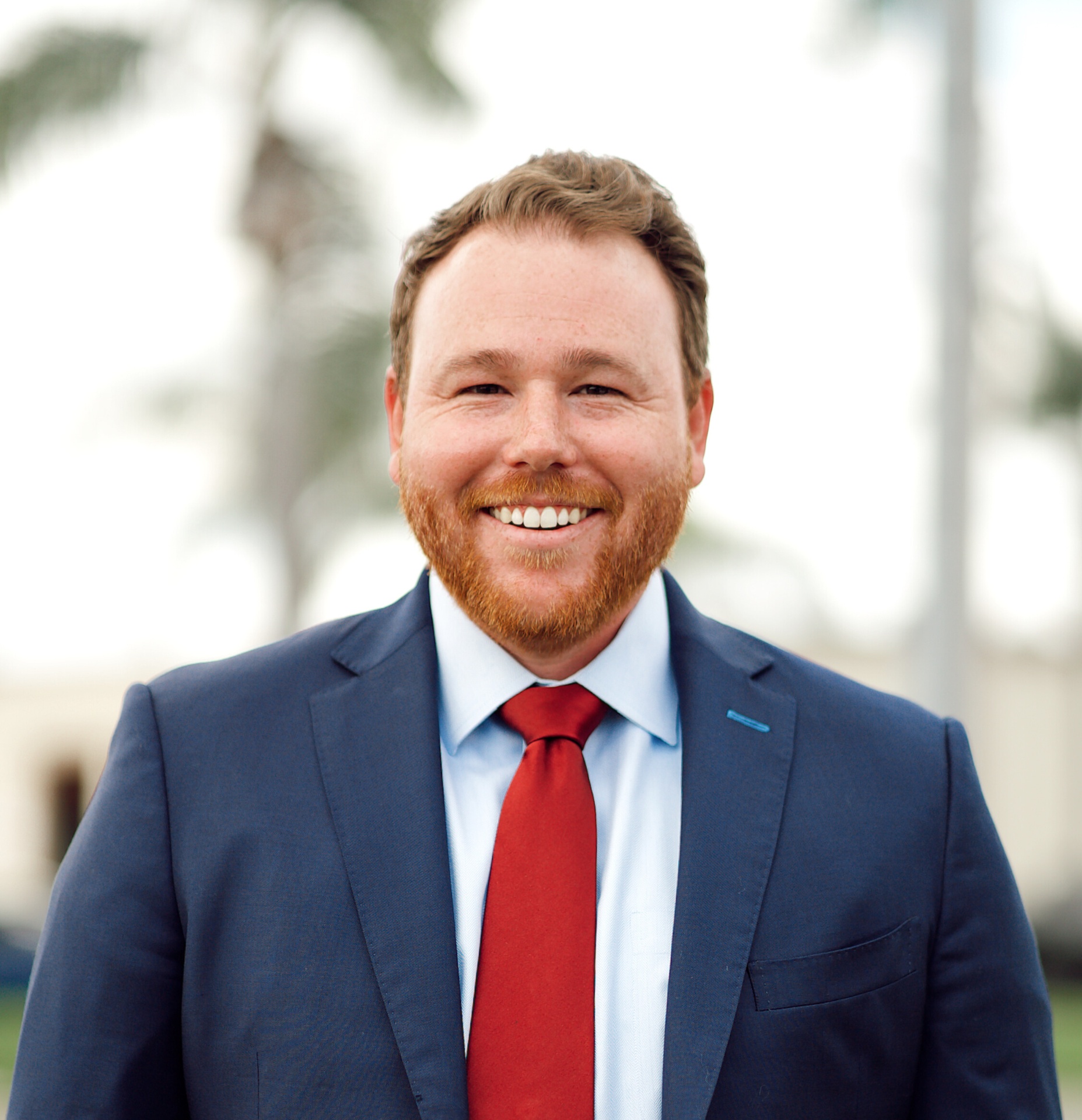
Cody Leivas · Principal & Managing Partner, Bluebird CRE
Principal & Managing Partner at Bluebird CRE, where he underwrites and operates value-add Midwest industrial real estate. He holds a Master of Science in Real Estate (Chapman) and a Master of Investment Management & Financial Analysis (Creighton), with involvement in $750M+ of commercial transactions. More from Cody
Start a conversation to learn how we acquire Midwest industrial. Start a conversation