
Understanding the Equity Waterfall and Preferred Return
July 28, 2026 · By Cody Leivas
Most passive investors read the projected return on the first page and stop. But the number that decides what you actually keep is buried later, in the distribution waterfall. It sets the order cash flows in, who gets paid first, and the point where the sponsor starts taking a bigger share. Understand the waterfall and you understand the deal. Skip it and you’re trusting a headline.
The pref sets the order of payment; the promote sets who profits at the margin. Read the waterfall before the projected return — it decides what you actually keep.
The two pieces: preferred return and promote
A waterfall is just an agreed order of payment. Two terms do most of the work.
The preferred return (the “pref”) is a hurdle the limited partners (LPs) get before the general partner (GP) shares in profits beyond its capital. An 8% pref means LPs get an 8% annual return on their money first. Here’s the catch: it’s a priority, not a guarantee. If the property doesn’t throw off the cash, the pref usually accrues and gets owed later. It’s not money in the bank.
The promote (or carried interest) is the GP’s bigger share of profits above the pref. It’s how a sponsor earns more than a flat management fee for doing the work and hitting the plan. A “20% promote over an 8% pref” means LPs get the first 8%, then the GP keeps 20% of profits past that hurdle.
Pref is not the same as cash flow. A deal can pay a current distribution below its pref in the early years and make up the shortfall at sale. So always ask: is the pref cumulative, does it compound, and is it paid currently or accrued?
A worked example (illustrative only)
The numbers below are illustrative — they show the mechanics, they don’t project any outcome. Assume a deal with a single profit split above an 8% pref and a 20% promote.
- LPs invest $5,000,000. The GP invests alongside them.
- Over the hold, the property returns capital and generates $2,000,000 in total profit available to split.
The waterfall runs in order:
- Return of capital. LPs receive their $5,000,000 back first.
- Preferred return. LPs receive the accrued 8% pref. Say that accrues to $1,200,000 over the hold.
- The split. The remaining $800,000 of profit is split 80/20. LPs take $640,000; the GP’s promote is $160,000.
| Waterfall tier | LP receives | GP receives |
|---|---|---|
| Return of capital | $5,000,000 | — |
| Preferred return (8%) | $1,200,000 | — |
| Profit split (80/20) | $640,000 | $160,000 |
| Total profit (excl. returned capital) | $1,840,000 | $160,000 |
Illustrative figures only — chosen to show the mechanics, not to project any outcome.
So of the $2,000,000 in profit, LPs keep $1,840,000 and the GP earns $160,000 — but only after LPs cleared their capital and their hurdle. Change the deal to a tiered waterfall (say 80/20 to a 12% return, then 70/30, then 60/40), and the GP’s share rises as performance climbs. That’s the whole point: a well-built waterfall pays the sponsor more only when investors do better.
Tiered waterfalls and the catch-up
Larger deals often stack multiple hurdles. Each tier raises the promote as the LP return crosses a new threshold, usually measured by IRR. The reason is alignment: the GP only captures real upside after delivering stronger and stronger results to the LPs.
Watch for a GP catch-up clause. After the pref is paid, a catch-up lets the GP take 100% of the next dollars until it’s “caught up” to its promote percentage of total profits — so it reaches the agreed split on the whole profit pool, not just the slice above the hurdle. A catch-up isn’t automatically bad, but it changes the math in a real way. Read it, model it, and know which side of the pref your dollars sit on.
Why alignment matters more than the percentage
It’s tempting to grade a deal by its pref alone — to assume a 9% pref beats an 8%. But that misses how the pieces fit together. A high pref on thin, optimistic cash flow can accrue unpaid for years and still leave you exposed if the business plan slips. A disciplined sponsor buying at a conservative basis, with a fair split, is worth more than a generous-looking hurdle on a deal that has to go perfectly.
Here’s what we look for, as principals who put our own money in alongside LPs:
- GP co-investment. A sponsor with real money in the deal feels the downside, not just the promote.
- Promote behind the pref, not in front of it. The GP should earn its bigger share after LPs clear their hurdle — never on day-one fees alone.
- Clear, current reporting. You should be able to see where you stand in the waterfall at any distribution, without decoding it yourself.
- A basis that protects the downside. The cleanest waterfall in the world doesn’t fix overpaying. A below-replacement-cost entry is what gives the structure room to work if the market doesn’t cooperate.
Our edge is operational, not financial engineering. The waterfall is how the economics get shared; the basis and the execution are what generate them in the first place.
The takeaway
The waterfall is the contract for how profit gets divided, in what order, and at what performance level the sponsor earns more. Read it before the projected return, not after. Confirm the pref’s terms, model the split at more than one outcome, and weigh the sponsor’s alignment over any single headline percentage. Targeted returns are targets, not promises — and the waterfall is where you find out whether those targets are built to favor you or the sponsor.
For more on how these deals are built, see how industrial syndications work, the broader passive investing hub, and our Midwest industrial market guide.
Bluebird works with accredited investors seeking passive Midwest industrial exposure — request access.
This article is educational and is not investment, legal, or tax advice, nor an offer to sell securities.
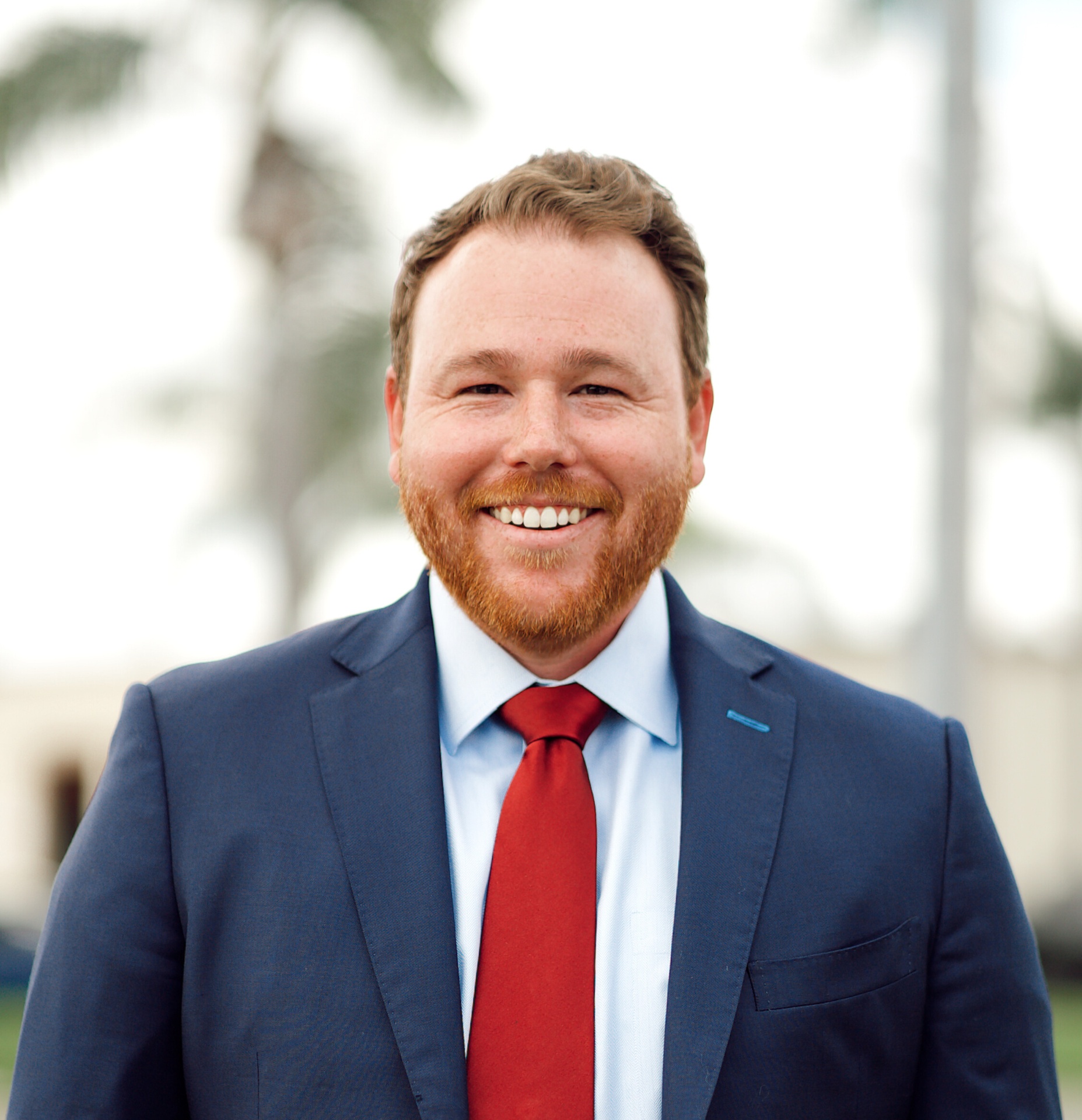
Cody Leivas · Principal & Managing Partner, Bluebird CRE
Principal & Managing Partner at Bluebird CRE, where he underwrites and operates value-add Midwest industrial real estate. He holds a Master of Science in Real Estate (Chapman) and a Master of Investment Management & Financial Analysis (Creighton), with involvement in $750M+ of commercial transactions. More from Cody
Start a conversation to learn how we acquire Midwest industrial. Start a conversation