What Is Industrial Outdoor Storage (IOS)?
August 7, 2026 · By Cody Leivas
What Is Industrial Outdoor Storage (IOS)?
Most industrial investing is a conversation about buildings — clear heights, dock doors, column spacing. Industrial outdoor storage flips that. Here the dirt is the asset and the building barely matters. We own and operate industrial across the Midwest, and IOS is one of the most supply-constrained corners we watch. Here’s what the asset class is, why the land behind it is hard to replace, and how you should think about it as a passive investor.
What IOS actually is
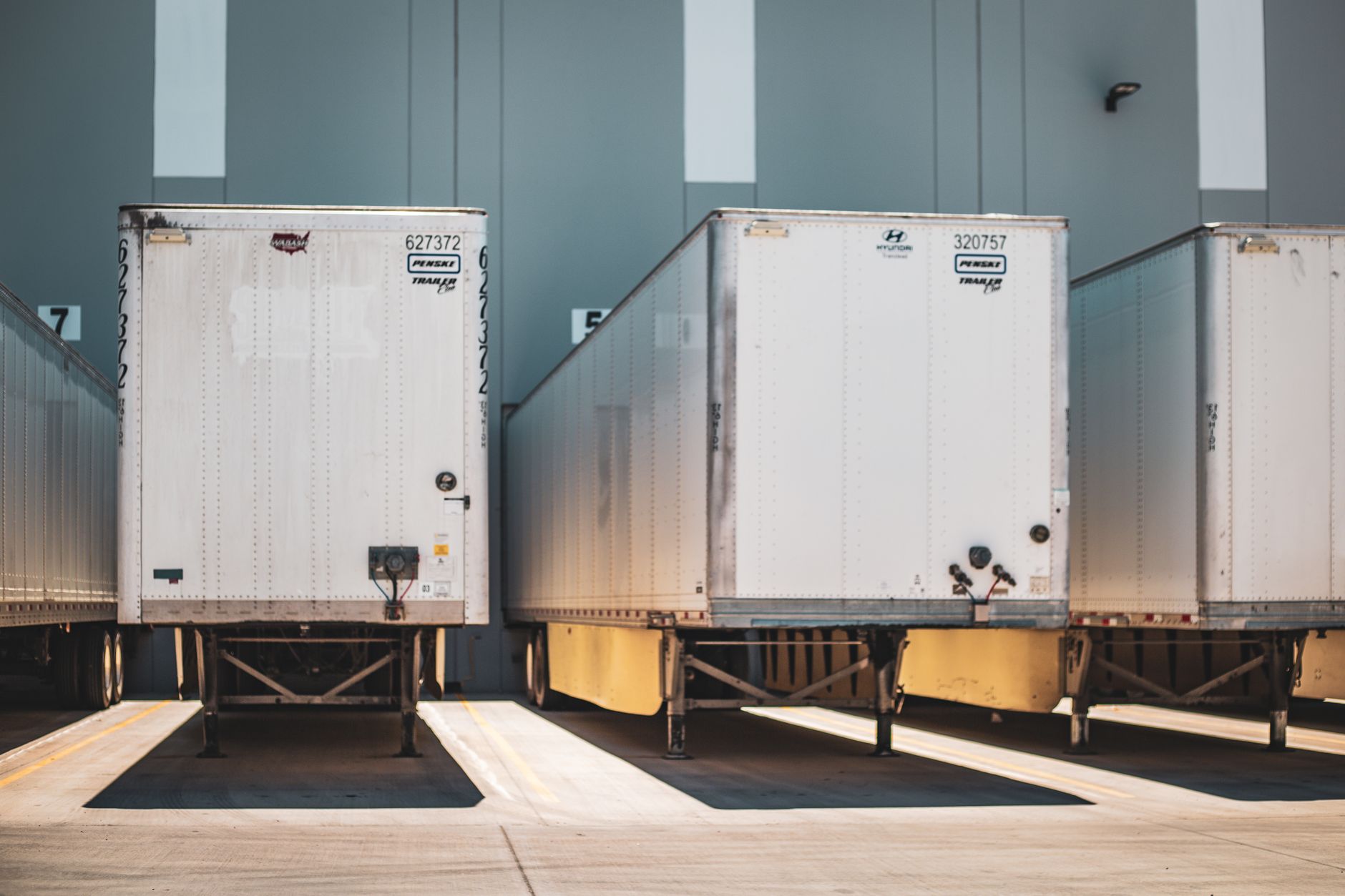
Industrial outdoor storage is low-coverage industrial land used to park, stage, and store things outside: trucks, trailers, containers, construction equipment, building materials, pipe, modular units, fleet vehicles. A typical site is a few acres of stabilized or paved yard with a small office or maintenance structure — often 5% to 15% building coverage, sometimes less.
The economics are the opposite of a warehouse. A distribution building is valued on the structure and its rent per square foot. An IOS site is valued on the land, its coverage ratio, and the yard income it throws off. You’re underwriting acreage, zoning, access, and tenancy — not bay depth. That matters, because it changes where the scarcity comes from.
| Attribute | Distribution warehouse | IOS yard |
|---|---|---|
| The asset | The building — clear height, docks, columns | The land and its coverage ratio |
| Valued on | Rent per SF of structure | Income per acre of yard |
| Building coverage | Majority of the parcel | 5%–15%, often less |
| New supply | Active spec pipeline | Structurally throttled — rarely re-entitled |
| Maintenance load | Roofs, HVAC, interior buildout | Yard, fencing, modest structure |
Why the land is supply-constrained
IOS is supply-constrained for a structural reason, not a cyclical one: you almost can’t build more of it.
- Zoning works against it. Outdoor storage is a heavily conditioned use. A lot of municipalities restrict it, screen it, or push it out of the industrial districts closest to population — the exact places tenants need.
- Higher-and-better-use pressure. Infill industrial land near highways and rail keeps getting absorbed by warehouses, last-mile facilities, and other vertical uses that pencil to a higher value per acre. Every time that happens, the IOS pool shrinks.
- It rarely gets replaced. When an IOS yard trades and converts to a building, no new yard gets entitled to take its place. The inventory ratchets down over time, not up.
So you end up with a slice of the market where new supply is throttled while demand keeps grinding higher. That gap, steady demand against a fixed or shrinking land base, is the whole thesis. It’s not a bet on big rent spikes. It’s a bet on scarcity that’s hard to manufacture away.
When an IOS yard converts to a building, no new yard gets entitled to replace it. The land base ratchets down while logistics, construction, and container demand keep grinding higher — scarcity you can't manufacture away.
The demand drivers
Three steady demand sources sit underneath IOS, and none of them is a fad.
- Logistics and trucking. Trailers, drayage equipment, and fleet vehicles need somewhere to sit between loads. Tighter parking rules and rising freight volumes push that need toward dedicated yards near interstates and intermodal hubs.
- Construction and equipment. Contractors, equipment-rental firms, and infrastructure crews stage machinery, materials, and modular units on yard space. Federal and private infrastructure spending feeds this directly.
- Containers and overflow storage. Container yards and seasonal overflow from undersized warehouses soak up whatever capacity exists, especially around port-adjacent and inland-distribution corridors.
These tenants are sticky. Moving a working yard (re-permitting, re-stabilizing, re-routing trucks) is expensive and slow. That supports retention and gives the landlord room to push rents at rollover.
How it sits next to traditional industrial
IOS doesn’t sit off on its own. It rides the same Midwest industrial demand we underwrite in buildings. Chicago, the region’s anchor, carries roughly 5.4% industrial vacancy with asking rents near $10.07/SF and around 4.6% year-over-year rent growth (CoStar, Q1 2026). Across our smaller Midwest markets, usable space stays tight and cap rates stay wider than the coastal gateways — Cleveland industrial, for instance, prices near a 10.4% market cap rate (CoStar, Q1 2026). When warehouse vacancy tightens and rents climb, that pressure spills straight onto the yard space that supports those buildings.
For a passive investor, the appeal is how simple it is to operate. There’s far less to maintain than a multi-tenant warehouse — no roofs full of HVAC, minimal interior buildout, modest capital needs. Net-lease and short-term yard structures are common, and the basis per acre often sits well below the cost of entitling and improving comparable land today. Same as the rest of our underwriting, the edge we want is operational, not financial engineering: buying durable land below replacement cost and managing tenancy well.
What a passive investor should evaluate
If you’re looking at an IOS deal as a limited partner, weigh a handful of things:
- Zoning and legal use. Is outdoor storage permitted by right, or does it lean on a conditional permit that could lapse? This is the single biggest risk in the asset class.
- The basis. Price per acre versus the cost to entitle and improve replacement land. A low basis is your margin of safety.
- Coverage and flexibility. Low building coverage keeps your options open and the yard income flowing — and it keeps the use defensible.
- Tenancy and lease structure. Credit, term, rollover schedule, and whether rents sit below market — the mark-to-market lever.
- The sponsor. Track record, conservative underwriting, and alignment through co-investment.
Targeted outcomes aren’t guarantees, and IOS carries real risks — entitlement, tenant credit, and liquidity among them. No real estate is risk-free.
The takeaway
IOS is a simple idea wearing a niche label: own scarce, well-located industrial land, lease it to tenants who have nowhere cheaper to go, and let a shrinking supply base do the patient work. If you’re an accredited investor who wants hands-off industrial exposure with a different risk profile than warehouses, it’s a corner of the market worth understanding. For more on how passive industrial deals are structured, see our passive-investing hub and our Midwest industrial market guide.
Bluebird works with accredited investors evaluating Midwest industrial — request access.
This article is educational and is not investment, legal, or tax advice, nor an offer to sell securities.

Cody Leivas · Principal & Managing Partner, Bluebird CRE
Principal & Managing Partner at Bluebird CRE, where he underwrites and operates value-add Midwest industrial real estate. He holds a Master of Science in Real Estate (Chapman) and a Master of Investment Management & Financial Analysis (Creighton), with involvement in $750M+ of commercial transactions. More from Cody
Start a conversation to learn how we acquire Midwest industrial. Start a conversation