Chicago Industrial Real Estate: Market Report
August 10, 2026 · By Cody Leivas
Chicago is the biggest industrial market in the Midwest, and it doesn’t trade like it. Vacancy sits at 5.4% (CoStar, Q1 2026), tenants like Amazon, UPS, and Walmart run distribution networks through it, and yet the small-bay buildings under $10M that make up most of the inventory get bid like a sleepy secondary market. Here’s the reason: institutional capital chases the big bulk boxes along I-80 and I-55. Almost nobody is underwriting the 20,000-square-foot infill buildings one at a time. That gap is the whole thesis.
The numbers
Chicago carries roughly 1.38 billion square feet of industrial space across about 25,690 buildings — by far the largest inventory base in the region (CoStar, Q1 2026). Vacancy is 5.4%, with availability (space marketed but not yet empty) at 8.4%. Asking rents average $10.07 per square foot, with triple-net rents near $8.72, and rents are up 4.6% year over year (CoStar, Q1 2026). Zoom out five years and asking rents have climbed from $7.59 to $10.07, a gain of about 33% (CoStar, 2021 Q1–2026 Q1).
Net absorption over the trailing twelve months is a positive 5.5 million square feet, with 19.8 million square feet still under construction and 6.8 million square feet delivered over the same period (CoStar, Q1 2026). Demand is still outrunning what’s finished and leased, even in a market this size. The market cap rate sits near 8.2%, with sale pricing around $99 per square foot (CoStar, Q1 2026).
Ground-up construction in Chicago runs well above $99/SF once you price land, shell, site work, and tenant improvements. Buying occupied small-bay buildings at or below that number means the replacement-cost math is already doing the work before you touch a lease.
Why the small-bay basis matters
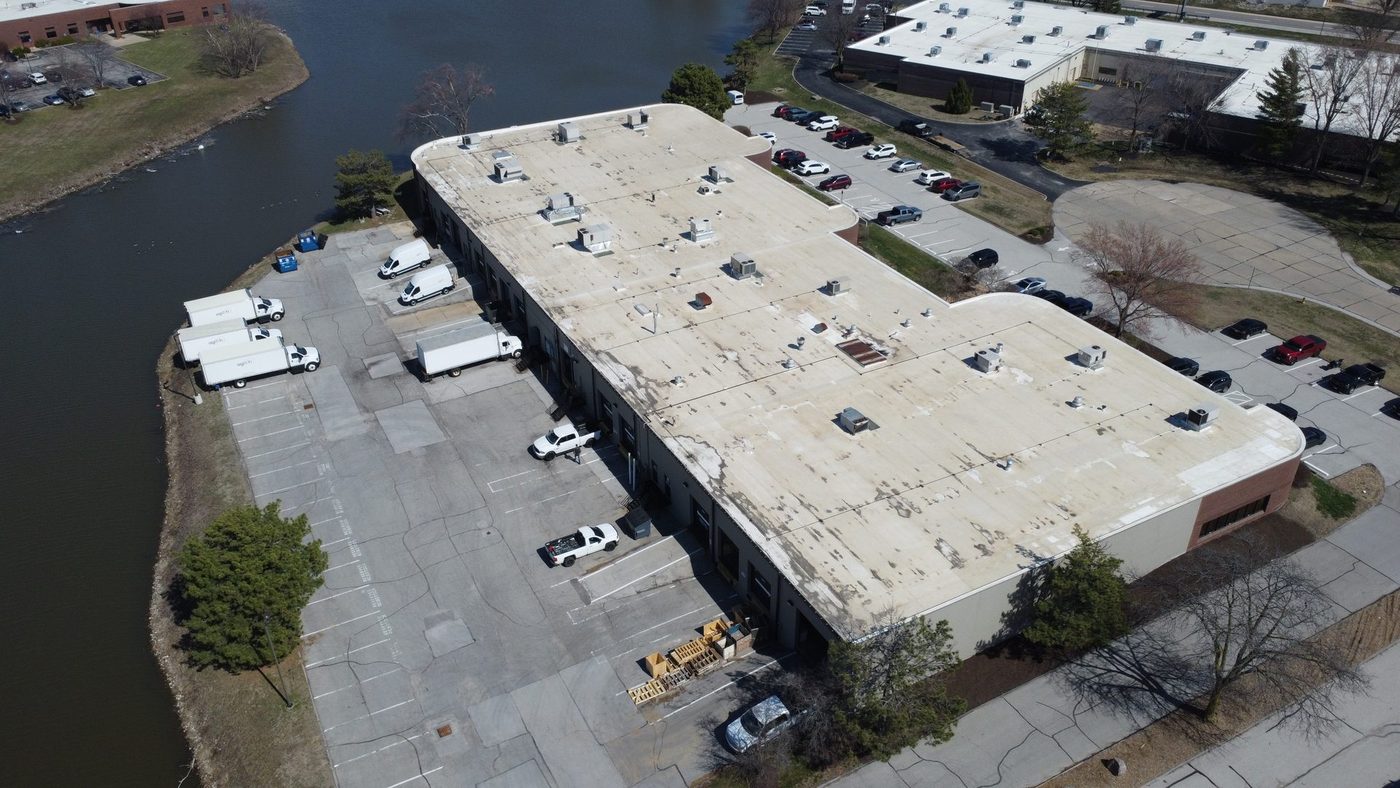
Chicago’s headline numbers are dominated by bulk distribution — the million-square-foot boxes that Amazon, UPS, and Walmart lease along the interstates. That’s real demand, and it’s why the market absorbs space the way it does. But it’s not the product we buy. Small-bay and light-industrial buildings, the 15,000 to 60,000 square foot boxes local trades, distributors, and light manufacturers actually occupy, are a different animal. Land in the mature, infill corridors is largely built out, so almost nobody is developing new small-bay supply. What exists stays leased, and it doesn’t get replaced.
That’s the mechanism, not just the observation: when a market this deep in inventory still can’t keep small-bay vacant, the reason is supply, not demand cycling. Rents don’t need a hot economy to climb — they climb because there’s nowhere for a displaced tenant to go. We buy into that scarcity below what it would cost to build the same building today. The basis is the margin of safety. We’re not betting on cap rates compressing from here; we’re betting that occupied, below-replacement product with sticky tenants holds its value even if nothing else moves.
Submarkets we watch
- I-55 Corridor — dense, established infill running southwest from the city, with strong small-bay and flex tenancy tied to local trades and light manufacturing.
- O’Hare — the airport submarket, where air-cargo proximity and a mature tenant base keep functional buildings tight regardless of what’s happening in bulk distribution.
- Joliet / Will County — the epicenter of Chicago’s big-box boom, useful context for us because it shows where the new supply is actually landing (not in small-bay).
- I-80 Corridor — a national distribution artery with deep intermodal rail access, anchoring the demand side of the market even where we don’t compete for product.
Demand drivers
Chicago’s industrial employment base runs near 587,000 across a metro of roughly 9.4 million people (CoStar, Q1 2026) — the deepest labor pool of any market we track. That scale is what lets Amazon, UPS, and Walmart run national and regional distribution out of here, alongside a long tail of manufacturers and wholesalers that need infill space close to the labor and the interstate grid. When your tenant base spans that many industries and company sizes, you’re not exposed to one sector’s cycle.
For the broader regional read, see our Midwest industrial market guide and the rest of our market reports. More on the metro itself is on our Chicago market page.
How Bluebird approaches the market
We underwrite Chicago the same way we underwrite every market: in-place rent versus market rent, lease term and rollover, submarket-level vacancy (not the metro average), and a conservative capital stack. The edge here isn’t calling the top of the cycle — it’s finding the functional, occupied small-bay and industrial-outdoor-storage assets under $10M that are too small for institutional buyers and too overlooked by local ones. We push income the operational way: renew leases toward market as they roll, keep the building leased, and let a low basis carry the downside.
Chicago isn’t a market you buy because it’s exciting. It’s a market you buy because the math works — deep tenant demand, structurally tight small-bay supply, and pricing on the right buildings that still sits under what it costs to build new. Low basis, real scarcity, rents with room to run. Targeted outcomes are not guarantees.
Market statistics above are drawn from third-party sources believed reliable and are provided for informational purposes only; they are not a guarantee of future results. Bluebird works with accredited investors — request access to learn more.

Cody Leivas · Principal & Managing Partner, Bluebird CRE
Principal & Managing Partner at Bluebird CRE, where he underwrites and operates value-add Midwest industrial real estate. He holds a Master of Science in Real Estate (Chapman) and a Master of Investment Management & Financial Analysis (Creighton), with involvement in $750M+ of commercial transactions. More from Cody
Start a conversation to learn how we acquire Midwest industrial. Start a conversation