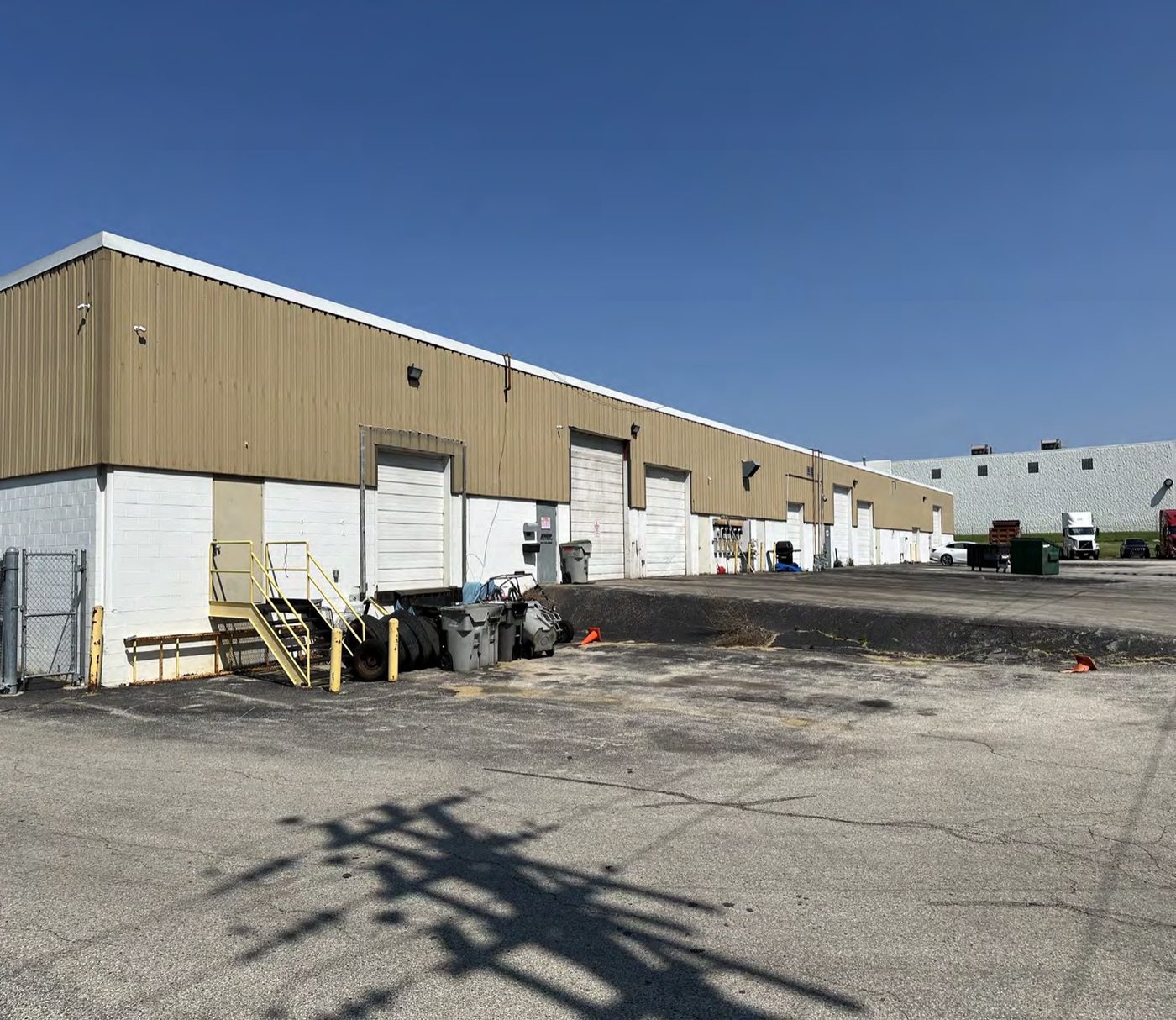
Milwaukee Industrial Real Estate: Market Report
June 9, 2026 · By Cody Leivas · Milwaukee market
Milwaukee never makes the headlines Dallas, Phoenix, or the Inland Empire do. That’s exactly why we like it. You’ve got durable manufacturing demand, a spot right on the I-94 corridor between Chicago and Minneapolis, and rents that sit below what it costs to build new. That last part is the whole thesis.
The numbers
271 million square feet across about 6,500 buildings (CoStar, Q1 2026). That’s the Milwaukee industrial base. Vacancy has held around 5.1%, but the small-bay segment we focus on runs a lot tighter — often below 3% in the most supply-constrained submarkets. Here’s the reason: nobody builds small-bay, so what exists stays leased. Average asking rents sit near $7.68 per square foot, with year-over-year rent growth around 1.6% (CoStar, Q1 2026).
Those headline numbers undersell it. The market is split. Big speculative box space has leased up slower across the country, while functional small-bay and flex (15,000 to 60,000 square feet, the buildings local businesses actually use) stays scarce. New construction skews to big-box because that’s what developers can pencil. So you end up with a shortage of exactly the product we buy.
Why the basis matters
The single most important thing about Milwaukee: you can often buy functional industrial buildings below replacement cost. When in-place rents sit well under the cost to build new, two things happen over time. Existing rents pull up toward the cost of new supply. And your downside is cushioned, because no developer is going to add competing space at a loss.
That’s the whole below-replacement-basis thesis. It’s not a bet on rent spikes or cap rates falling. It’s a bet that steady demand plus tight new supply slowly closes the gap between what a building rents for today and what it would cost to replace. Below replacement cost is nice, but it doesn’t automatically make a building worth more — if tenants won’t pay the rent, the income approach doesn’t get you there. You have to prove it.
Milwaukee asking rents are up roughly 52% since 2016 to $7.68/SF (CoStar, Q1 2026), and functional small-bay still trades below replacement cost. We underwrite to that basis, not to a heroic exit, so the basis protects us even if nothing exciting happens.
Submarkets we watch
- New Berlin / Waukesha — the deep, diversified small-bay heart of the metro, with sticky local tenancy.
- Menomonee Falls — strong single-tenant and flex fundamentals with long-term occupancy.
- Oak Creek / Franklin — benefiting from major distribution investment and I-94 access.
- Germantown — a constrained submarket where functional product trades well.
Demand drivers
The tenant base here is advanced manufacturing, food and beverage production, healthcare and medical equipment, and a growing e-commerce and distribution footprint. Manufacturing coming back onshore has added demand for flexible industrial space near a skilled labor pool. That shows up in both occupancy and rent growth across multi-tenant and flex product.
Lake Michigan port access and the I-94 corridor give Milwaukee logistics relevance bigger than its size. And below-replacement construction costs keep the basis attractive for buyers willing to do the operational work.
How Bluebird approaches the market
We underwrite Milwaukee deals on in-place versus market rent, lease structure and rollover, submarket vacancy, and a conservative capital stack. Then we push the income — leasing, mark-to-market on renewal, and steady operations. Several of our Wisconsin buildings sit in these exact submarkets, including Milwaukee, New Berlin, and Menomonee Falls. You can see more on our Milwaukee market page and across our portfolio.
Milwaukee isn’t glamorous. It’s a patient, basis-driven play in functional buildings real businesses need. Low basis. Tight supply. Rents with room to run. To us, that’s exactly what makes it work for accredited investors who want durable industrial exposure.
Market statistics above are drawn from third-party sources believed reliable and are provided for informational purposes only; they are not a guarantee of future results. Bluebird works with accredited investors — request access to learn more.

Cody Leivas · Principal & Managing Partner, Bluebird CRE
Principal & Managing Partner at Bluebird CRE, where he underwrites and operates value-add Midwest industrial real estate. He holds a Master of Science in Real Estate (Chapman) and a Master of Investment Management & Financial Analysis (Creighton), with involvement in $750M+ of commercial transactions. More from Cody
Start a conversation to learn how we acquire Midwest industrial. Start a conversation