Anatomy of a Small-Bay Industrial Deal
June 13, 2026 · By Cody Leivas
“Value-add” is one of the most overused phrases in real estate. It can mean a real, lasting improvement — or a thin spreadsheet that only works if rents jump and cap rates fall. Here’s how Bluebird actually underwrites a small-bay industrial deal, using an anonymized, closed-deal profile typical of what we buy in the Midwest.
The setup
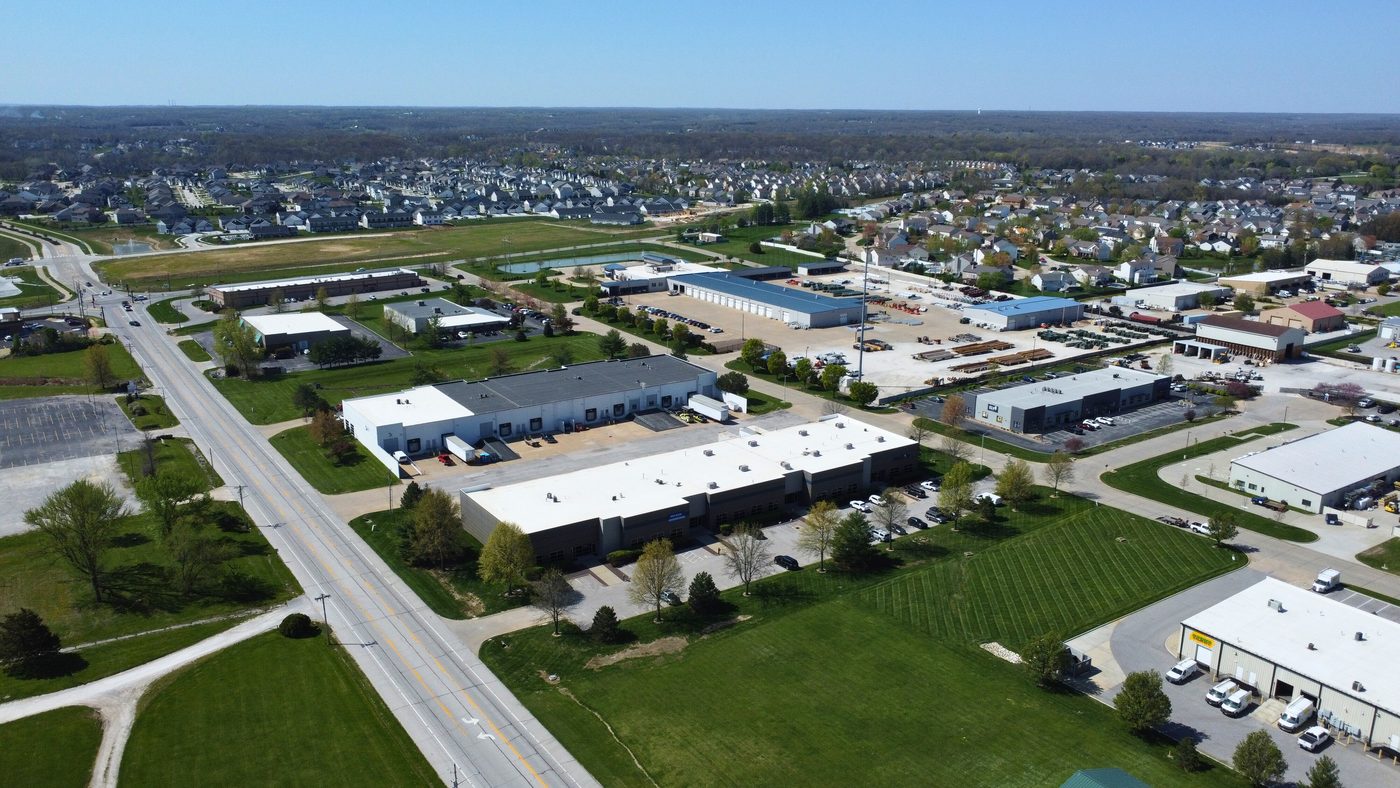
Picture a 30,000-square-foot multi-tenant industrial building in a tight Midwest submarket. Three or four tenants (a fabricator, a distributor, a service contractor) with leases that expire in different years. In-place rents sit below market because the prior owner held leases flat for years. The building works fine, it’s just under-managed.
That’s the bread and butter of small-bay: not a trophy asset, but a workhorse building local businesses need and that’s hard and expensive to replace. The contrast with big-box and trophy product is the whole reason we focus here.
| Attribute | Big-box / trophy | Small-bay (Bluebird) |
|---|---|---|
| Tenant base | One large credit tenant | Three to five diversified local tenants |
| Lease rollover | Binary — one expiration | Staggered — risk spread across leases |
| New supply | Heavy spec pipeline | Structurally constrained, costly to replace |
| Value-add lever | Cap-rate or rent-spike bet | Mark-to-market as below-market leases roll |
| Downside if a tenant leaves | 100% of income gone | One vacancy dents, not breaks, the deal |
We run every deal through the same four steps. Each one has to stand on its own before we move to the next.
Step one: the basis
The first question is always the same — what’s our basis versus replacement cost? If we can buy a working building well below what it would cost to build today, we start with a margin of safety. Here’s the reason that matters: nobody builds new supply to compete with us at that basis, so the downside is protected and existing rents have room to drift up toward the cost of new construction.
We’re not underwriting to a heroic exit. We’re underwriting to a basis that makes sense even if nothing exciting happens.
Step two: in-place vs. market rent
Next we map every lease: current rent, expiration, escalations, and the gap to market. The value-add lever in small-bay is rarely one big home run — it’s the rents adding up as below-market leases roll to market. A building with rents 15–25% under market and staggered rollover gives us a clear, controllable path to higher net operating income without betting on the macro.
We stress this, hard. What happens to returns if market rents stay flat? If a tenant leaves and re-leasing takes longer than planned? If the deal only works when the wind is at our back, we pass.
Step three: the business plan
Once we know the basis and the rent roll, the plan writes itself: renew or replace below-market tenants at market as leases roll, fix the deferred maintenance, tighten operations and expense recoveries, and make the building easier to lease. Multiple tenants on staggered leases spread the risk (no single lease makes or breaks the deal), and sticky local tenants keep occupancy steady.
Step four: the capital stack and downside
Conservative financing is non-negotiable. We size the debt so the building can pay it through a soft patch, not just in the rosy case. Then we run the downside: lower rents, longer downtime, a higher exit cap rate. A deal we like still gives an acceptable outcome in that case — the upside is a bonus, not the thesis.
Why this discipline compounds
None of this is flashy. It’s a repeatable process: buy below replacement cost, with below-market rents, in markets where demand keeps showing up, financed conservatively, and run well. Do that over and over across a Midwest industrial portfolio, and that discipline is what turns single buildings into steady, income-producing exposure for our investors.
Midwest small-bay markets stay tight: Milwaukee industrial vacancy sits near 5.1% across roughly 270 million SF, and St. Louis near 5.4% (CoStar, Q1 2026). Buy below replacement cost with below-market rents in markets like these, and the return comes from operational execution — not from a bet on cap-rate compression.
If you’d like to understand how we underwrite in markets like Milwaukee and St. Louis, request investor access.
This article describes our general approach using an anonymized, illustrative example. It is not investment advice, a description of any specific current offering, or an offer to sell securities. Targeted outcomes are not guarantees.

Cody Leivas · Principal & Managing Partner, Bluebird CRE
Principal & Managing Partner at Bluebird CRE, where he underwrites and operates value-add Midwest industrial real estate. He holds a Master of Science in Real Estate (Chapman) and a Master of Investment Management & Financial Analysis (Creighton), with involvement in $750M+ of commercial transactions. More from Cody
Start a conversation to learn how we acquire Midwest industrial. Start a conversation